
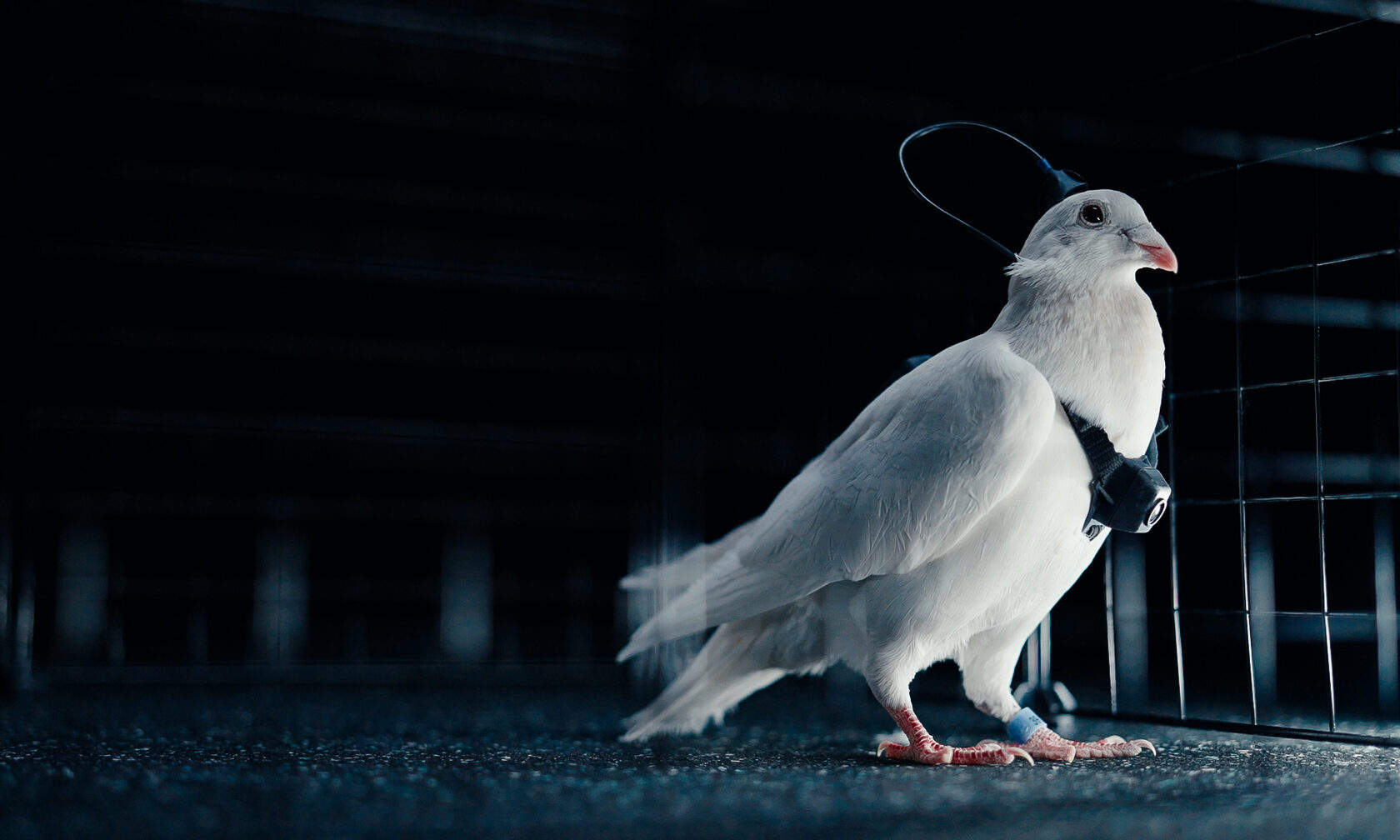
Electrodes connected to a stimulator in a small backpack are implanted in a pigeon’s brain. Stimulating specific areas of the brain creates the desire to move in the required direction. Positioning is carried out via GPS and additional navigation methods. Bio-drones solve tasks that require long-term remote monitoring of infrastructure: inspecting power lines, gas distribution nodes and other critical facilities. The cost of one bio-drone is comparable to that of a drone of a similar class, but its range and operating time are incomparably greater.
As reported by Vedomosti, citing the developer — the Neiry Group of Companies, the longest flight of a pigeon bio-drone lasted more than 10 hours. At the same time, operators could remotely control the birds from a distance of more than 100 km.
Over the year, the bio-drones learned to take off on command, gain altitude, land and even perform some aerobatic maneuvers. The birds were also equipped with cameras, and the developers plan to improve them in the near future.
Background from ViZh
Neiry Group of Companies presented pigeon bio-drones in November 2025, and their advantages are autonomy and range. They do not always require operator control: the flight task is loaded into the controller, after which the pigeon independently follows the planned route. And unlike industrial drones, the bird is capable of covering long distances without recharging.