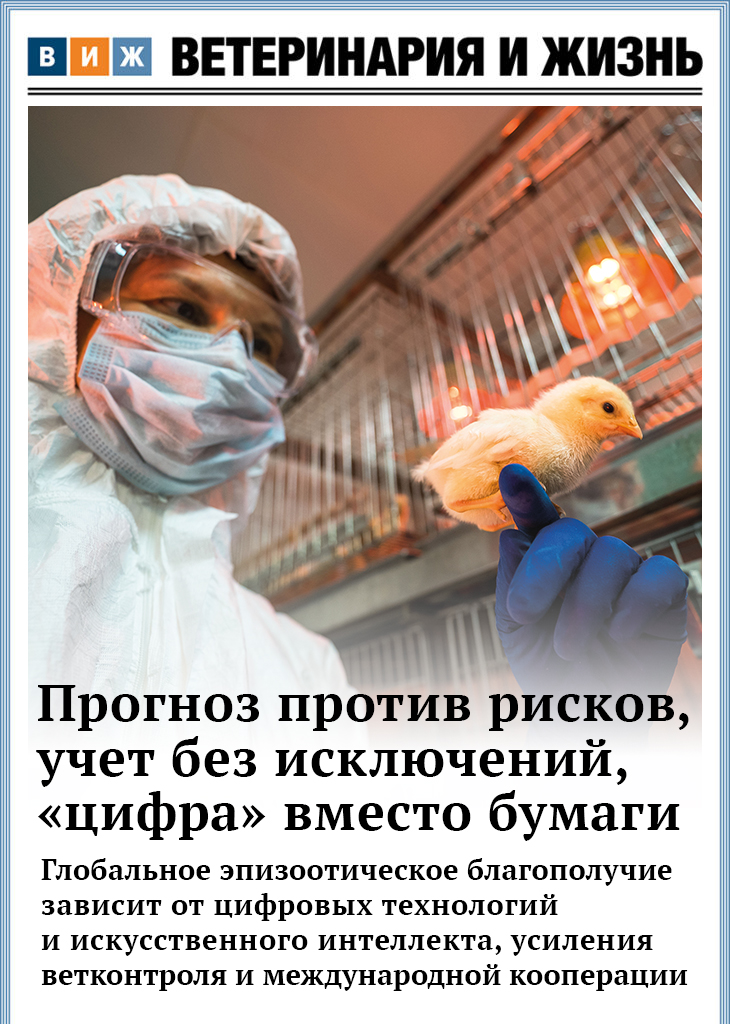


The Federal Center for Animal Health subordinate to Rosselkhoznadzor has received an official notification from the World Organisation for Animal Health (WOAH) about an increase in the number of registered bird flu outbreaks worldwide, mainly in European countries. From October 2 to November 5, 2026, 18 countries registered 108 outbreaks among wild birds.
Cases have been detected in Austria, Albania, Belgium, Hungary, Cyprus, Denmark, Estonia, Germany, Iceland, Italy, Latvia, Lithuania, the Netherlands, Norway, Romania, Serbia, Sweden and the United Kingdom. WOAH links the increased virus activity to the start of the autumn-winter season, so this situation does not indicate a global surge in incidence.
“In Russia, particular attention is being paid to the prevention of bird flu and the control of the epizootic situation. The national veterinary surveillance system includes monitoring, laboratory diagnostics and the implementation of necessary anti-epizootic measures,” the statement says.
As Rosselkhoznadzor notes, the availability of domestic means of specific prevention plays an important role in protecting poultry farming. Federal Center for Animal Health has the scientific and production expertise to develop such products: the institute has created and registered Russian vaccines against bird flu virus subtypes H5, H7 and H9N2. They make it possible to build a system of specific prevention taking into account the epizootic situation and the needs of farms.
In addition, the institute’s specialists have developed methodological recommendations for assessing the effectiveness of biological protection systems at poultry breeding and rearing enterprises — they help prevent the introduction of infectious agents and determine measures to eliminate violations.
Earlier, ViZh reported on the largest outbreak of highly pathogenic bird flu on farms in Norway.