
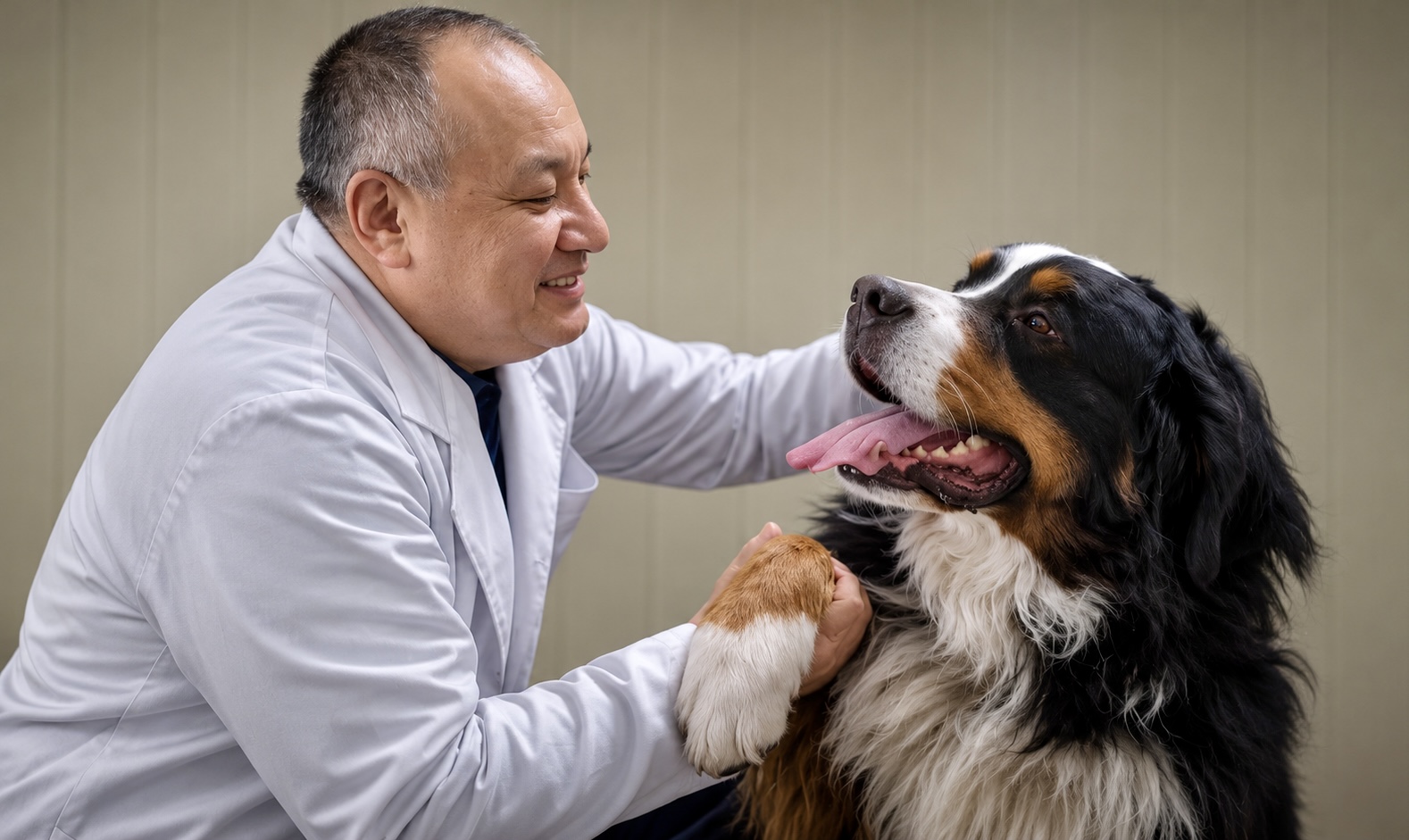
As Poladzhan Suleymanov рассказал, this story happened in 2006. A large stray dog, covered in blood, was brought to the clinic. The dog was placed on the operating table and the wound began to be cleaned.
Only then did the doctor see the true extent of the injuries. The muscles, trachea, esophagus and veins on the left side of the neck had been severed. The wound reached almost to the spine.
“When we cleaned the wound, I was horrified. My hands dropped: the injuries were, in essence, incompatible with life. But I decided to operate anyway,” Poladzhan Suleymanov recalls.
The operation lasted almost six hours. The doctor had to reconstruct the damaged muscles, trachea, esophagus and veins.
“We practically sewed the head back on,” he says, describing the scale of the intervention.
The dog survived. It was treated for about another month for hemothorax — a buildup of blood in the chest cavity. According to Poladzhan Suleymanov, the Evening Bishkek newspaper later wrote about the case. After publications, many people wanted to take the rescued stray home.
The first entry in Poladzhan Suleymanov’s employment record in his specialty appeared in 1986. Veterinary medicine was brought into his life by his older brother, who later became a Doctor of Veterinary Sciences and professor. There were other people in the family in the profession too: Poladzhan Suleymanov’s father-in-law worked as a veterinary bacteriologist. Books by British veterinarian and writer James Herriot helped him finally make his choice.
Over years of practice, Poladzhan Suleymanov has treated not only cats and dogs, but also wallabies, sugar gliders, monitor lizards, golden eagles, turtles and lions. He has always been especially drawn to working with predators and wild animals.
“With them it is always interesting, and there are many unexpected decisions you have to make on the fly,” the doctor explains.
One such patient was an ostrich with a fractured femur. The case involving osteosynthesis performed on it became the best known, although over his long career the doctor has had many other stories — both amusing and sad.
“Every time you begin treating one case or another, you hope for success, but to be honest, that does not always happen,” Poladzhan Suleymanov notes.
He now provides consultations only for health reasons. He sees participation in VETTORIA as an opportunity to sum up many years of work.
“Perhaps this award will be a worthy apotheosis of my veterinary marathon,” says Poladzhan Suleymanov. For him, it would mean recognition of his contributions to veterinary medicine, his colleagues and his students, as well as, in his words, the chance to “make way for the young.”
The International VETTORIA Award was established by the Lintega media group and the publication “veterinary medicine and Life.” It is intended to recognize the professional achievements of veterinarians and clinics working with companion animals. The award’s general partner is NITA-FARM, and the exclusive partner in the biopreparations category is Vetbiokhim.
Applications are accepted until December 31, 2026 inclusive. To get started, simply fill out a short form. After that, the award manager will contact the participant and help prepare the remaining materials.